
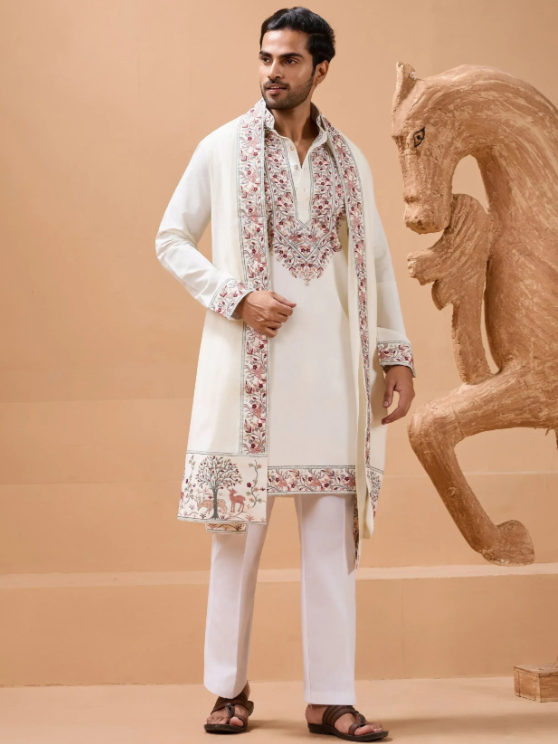
Choosing wedding dresses for men has become less about following one fixed traditional style and more about finding clothing that feels appropriate, comfortable, and personal. Modern wedding wardrobes include kurtas, sherwanis, jackets, waistcoats, and coordinated ethnic sets, giving men plenty of options for different ceremonies and celebrations.
A wedding outfit should look polished in photographs while remaining comfortable throughout the event. Long ceremonies, family gatherings, meals, and celebrations can last for several hours, so fabric, fit, footwear, and layering all deserve attention. The best outfit brings these practical details together without losing its traditional character.
Choosing an Outfit According to the Wedding Function
Different wedding events naturally call for different levels of dressing. A simple family ceremony may suit a lightly embroidered kurta, while a reception or main wedding celebration can accommodate richer fabrics, decorative jackets, or more detailed embroidery. Understanding the role of the event makes outfit selection much easier.
The time of day can also influence the choice. Daytime functions generally work well with lighter shades and breathable materials, whereas evening celebrations allow deeper colors and more elaborate textures. Considering the venue alongside the event schedule can help create an outfit that feels suitable rather than unnecessarily formal.
Getting the Fit Right From the Start
A beautifully designed outfit can still feel uncomfortable when the fit is not right. The shoulders should allow natural movement, sleeves should not feel restrictive, and the trousers should provide enough room for sitting and walking. These details become especially important during long wedding ceremonies.
Men should also consider the complete outfit rather than checking individual pieces separately. A jacket may feel comfortable on its own but become restrictive when worn over an embroidered kurta. Trying all the layers together before the event can reveal whether any adjustment is needed.
Selecting Fabrics That Support Comfort
Fabric has a direct effect on how an outfit feels throughout a celebration. Cotton blends and linen can work well for warm daytime functions, while silk and richer textured fabrics may be better suited to evening events. Lightweight materials can also make movement easier during long ceremonies.
The amount of embroidery should be considered alongside the fabric. Heavy embellishment can add visual richness but may also increase the overall weight of the outfit. Choosing moderate detailing can provide a festive appearance while keeping the clothing easier to wear for several hours.
-
Select breathable fabrics for warmer functions.
-
Choose richer textures for evening celebrations.
-
Check movement before finalizing layered outfits.
-
Consider embroidery weight alongside fabric choice.
Adding Traditional Details Without Making the Outfit Heavy
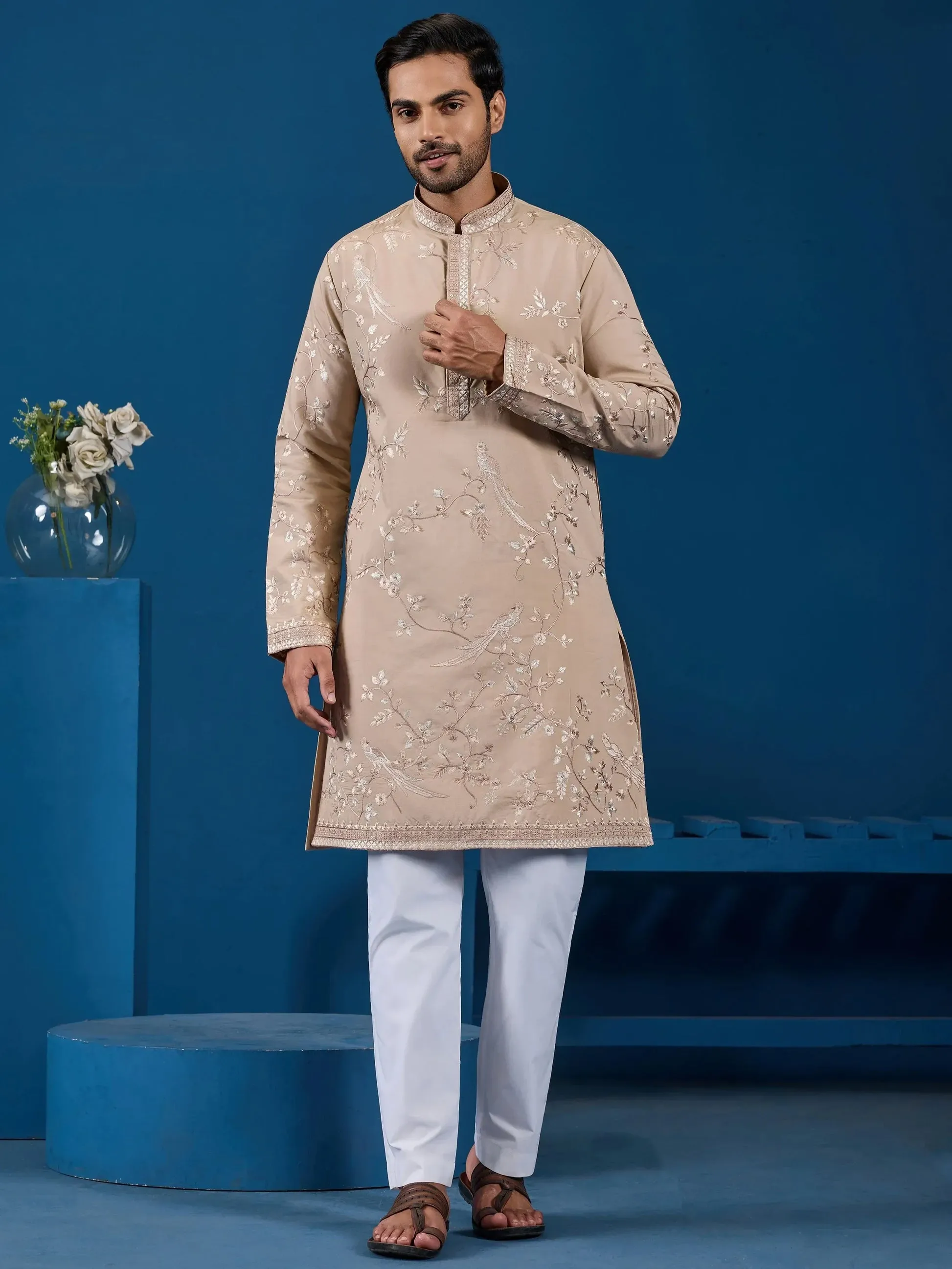
Traditional details can give men’s wedding clothing its distinctive character, but they do not always need to be extensive. A textured collar, embroidered cuffs, decorative buttons, or a subtle patterned waistcoat can provide enough visual interest. These smaller details often work particularly well when the base outfit is kept simple.
A wedding kurta for men can also become more formal through thoughtful layering. Adding a structured waistcoat or coordinating jacket can change the appearance without requiring excessive embroidery. The result can feel festive and traditional while remaining comfortable enough for ceremonies, photographs, and conversations throughout the celebration.
Colors That Make Wedding Outfits Stand Out
Color is one of the easiest ways to give a men’s wedding outfit a distinctive personality. Ivory, beige, and soft pastel shades create a refined daytime appearance, while navy, burgundy, emerald, and charcoal can bring more depth to evening celebrations. Metallic accents can then add a festive touch without overwhelming the base color.
The choice does not always have to match the wedding décor exactly. Complementary shades can create a more coordinated appearance in photographs while allowing the outfit to retain its own identity. Considering the bride’s outfit, venue, and overall celebration can help create harmony without making both looks appear overly coordinated.
Footwear and Accessories Complete the Ensemble
Traditional footwear can add character to even a relatively simple outfit. Juttis and mojaris work naturally with kurtas and sherwanis, while polished loafers can introduce a contemporary direction. The most important consideration is comfort because wedding celebrations often involve considerable walking and standing.
Accessories should remain connected to the overall styling. A pocket square, brooch, traditional watch, or subtle stole can add personality without making the outfit feel crowded. When the clothing already contains embroidery or layered textures, choosing fewer accessories usually creates a cleaner and more sophisticated result.
-
Select footwear according to the outfit’s formality.
-
Keep accessories balanced with embroidery.
-
Use a stole for additional traditional detail.
-
Prioritize comfort during lengthy celebrations.
Conclusion
A versatile wedding wardrobe does not require a completely different outfit for every ceremony. A well-fitted kurta can be restyled with different waistcoats, jackets, trousers, or footwear, while a neutral sherwani can take on a fresh appearance through changes in accessories and layering.
The most worthwhile choices combine traditional appeal with practical comfort. Instead of focusing only on elaborate decoration, consider fabric quality, fit, color, and how easily the outfit can be worn again. With thoughtful styling, men’s wedding clothing can feel festive and distinctive while remaining comfortable enough to enjoy every part of the celebration.